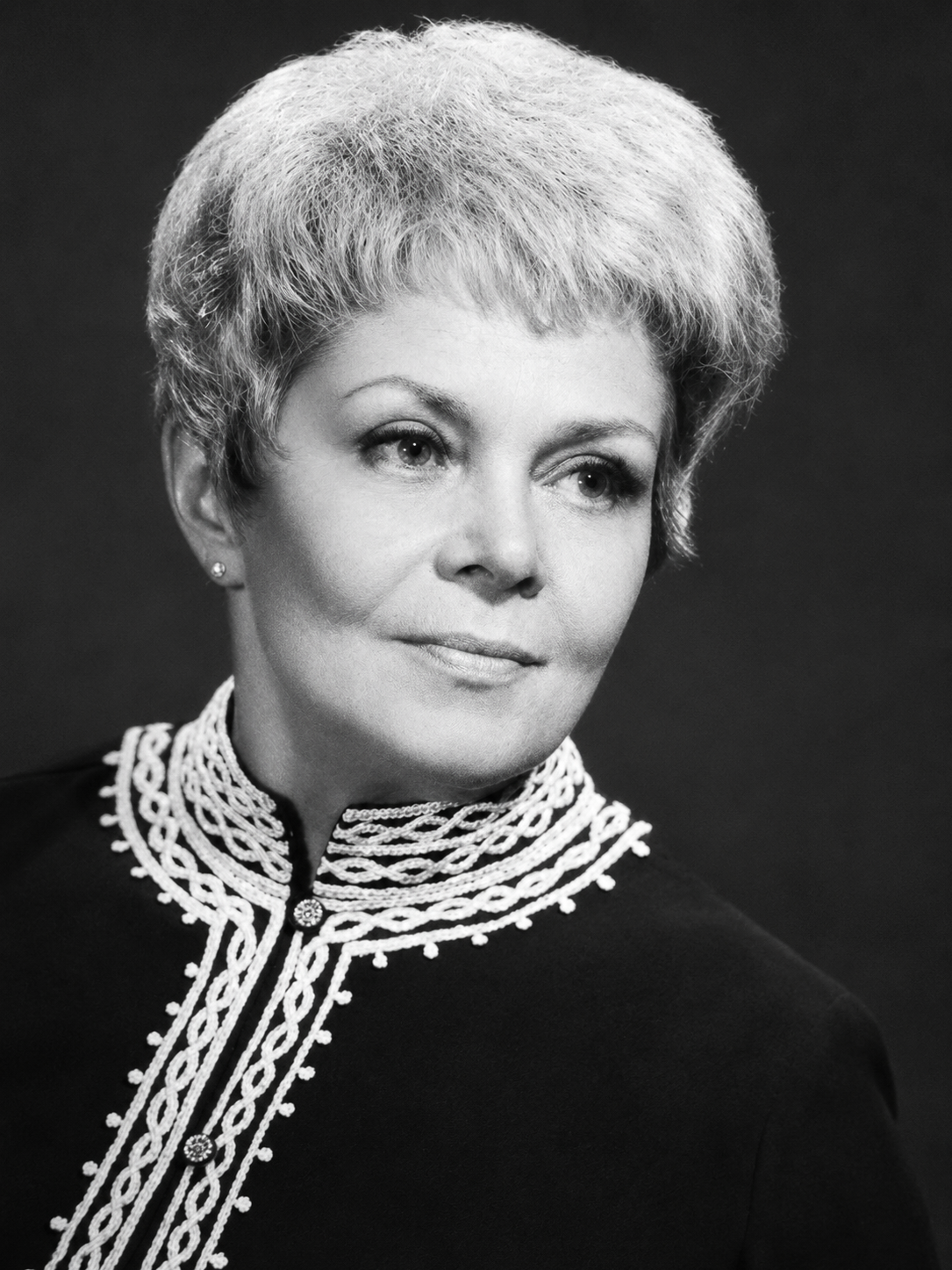
About Ethel Barrett
Ethel Barrett was a storyteller first.
Known to generations as “The Story Lady,” she spent more than forty years bringing the Bible to life through books, radio, television, recordings, and live performances. With quick wit, unforgettable characters, and a gift for turning Scripture into a story you could almost step inside, Ethel reached millions of readers and listeners without ever taking herself too seriously.
She was an award-winning storyteller, a prolific author, and an entertainer with impeccable comic timing—but underneath it all was a remarkably simple purpose: to tell stories that pointed people toward God.
Scroll on for the story of the woman behind the stories.
Her Story
She was getting dressed in her cabin at a Forest Home convention when the sky cracked open. Jets, breaking the sound barrier for the first time she'd ever heard it — but nobody had told her that's what it was. A small-town girl from upstate New York, she was certain of only one thing: the Lord was coming back, and He was coming back now. So she did the only sensible thing. She threw open the door, ran outside in nothing but her slip and hollered "How great Thou art!" telling her audience that she thought the Lord was returning and “wanted to make sure He knew which side I was on.”
She told that story on stages for the rest of her life, and audiences never stopped losing it. That was Ethel Barrett — dead serious about her faith, and never, ever precious about herself.
A Nurse Who Couldn't Control a Sunday School Class
The career that made her famous didn't start on the radio or the stage — it started in a hospital ward. Ethel trained and worked as a registered nurse, and by her own account never expected to end up in ministry at all. Then someone at church talked her into taking over a Sunday school class of boys nobody else could handle.
It did not go well at first. But Ethel was not the type to lose a room twice. She started experimenting — voices, sound effects, cliffhangers, anything that would make a restless nine-year-old sit still and listen — and discovered she had a gift for it. The techniques she spent the rest of her career perfecting, the ones that made her famous, were forged surviving that classroom.
It also opened a door. Christian ministry in the mid-twentieth century was, in most places, closed to women — no pulpits, no ordination, few platforms of any kind. But Sunday school was different, and so was training the teachers who ran it. Ethel built a career in the one lane that was open to her, and then widened it herself: from one unruly classroom to Story Editor at Gospel Light Publications, to stages across the country, to records, radio, and eventually television — reaching far more people than any single pulpit could have held.
By the time she reached Hollywood in the early 1950s, she had already figured out the trick that would define her career: the Bible wasn't a book to be explained at people. It was a library of adventure, treachery, courage, and impossible odds — and it deserved to be told, not summarized.
She told it with sound effects. She told it in a dozen voices, switching between them so fast — a wicked queen one breath, a nervous shepherd boy the next — that reviewers swore she seemed to be interrupting herself. In 1948, at 35, she brought that voice to the airwaves at WPTL and WPTR in New York — and in 1949, the National Sunday School Association gave her its top honor for her radio dramatization of the fall of Jericho. It was the first of many.
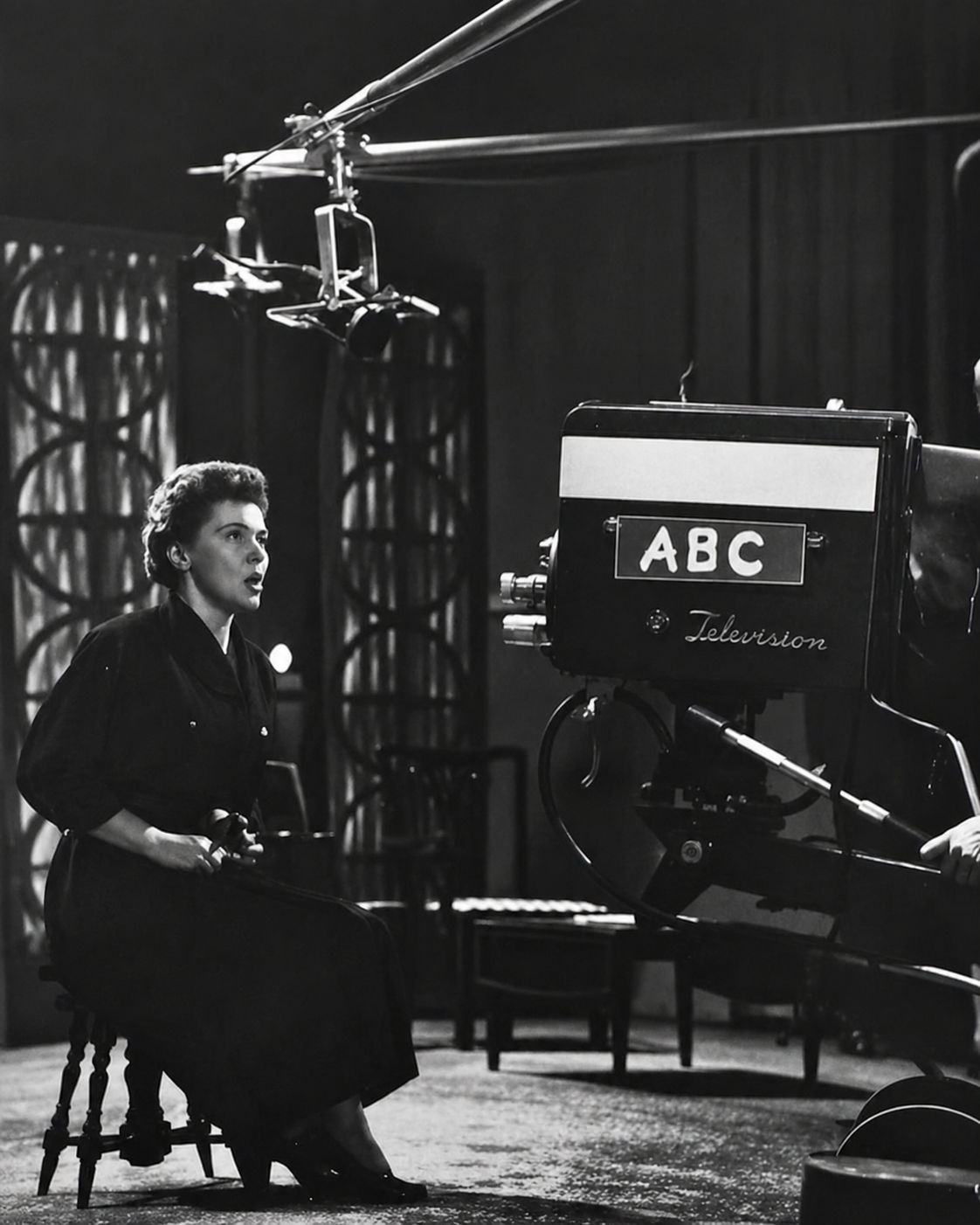
By 1959 she was Story Editor at Gospel Light Publications, and Light and Life Evangel was already calling her "Storyteller Extraordinary" — a title that stuck for the next fourteen years, showing up again in a 1973 profile like it had never left. In between, she became the Story Lady: touring the Knife-and-Fork Club and Executive Club speaking circuit from Wichita to Reno, a fixture on radio and early television, a woman Reader's Digest editor Stanley High thought worth quoting in her own promotional bio, and a Choice magazine cover subject in the spring of 1960 — the same year Cowman Publications released her book Storytelling — It's Easy, which really was, if you happened to be Ethel Barrett.
A Sense of Humor and a Dead-Serious Heart
Ask her about the secret to holding a room and she'd tell you: cultivate a sense of humor, laugh at your characters and at yourself — but never, ever get flip with God. It's the closest thing she left behind to a mission statement, and she meant every word of it.
That balance is what made her books for adults land the way they did. Titles like Sometimes I Feel Like a Blob, Will the Real Phony Please Stand Up, and There I Stood in All My Splendor turned her own flaws and missteps into the punchline — self-deprecating, disarming, and somehow always circling back to something true about grace. "We would worry less about what others think of us," she wrote, "if we realized how seldom they do." It's the kind of line that gets a laugh and then quietly follows you home.
Underneath the voices and the jokes was a woman who described her own purpose in exactly these terms: "I have a great sense of urgency. My whole life is boiled down to just one thing — the cause of Christ." She said it more than once, decades apart, and meant it the same way every time.
A Storyteller to the End
Ethel kept going long after most performers would have called it a career. She was still speaking at conferences and colleges into her sixties and seventies, still opening with the Fanny Crosby story she'd been telling since the early 1950s, still — by her own account — dead serious underneath all that comic delivery. In 1978, Gospel Light announced she'd been nominated for a Grammy. In 1982, her storytelling made the leap to video with the Video Storytime series, carrying the same voices and the same buzz-saw sound effects to a new generation who'd never heard her on the radio at all. In 1989, her publisher Regal Books wrote that over 4 million copies of her books were in print.
She turned Scripture into adventure and turned her own humanity into an open book, and for four decades audiences showed up for both. As one fan wrote to her by hand after a Knife-and-Fork Club evening in 1960: "We adored you. Hope to see you again."
They still do.