
Troubles
From the Archive: An Original Performance Script by Ethel Barrett

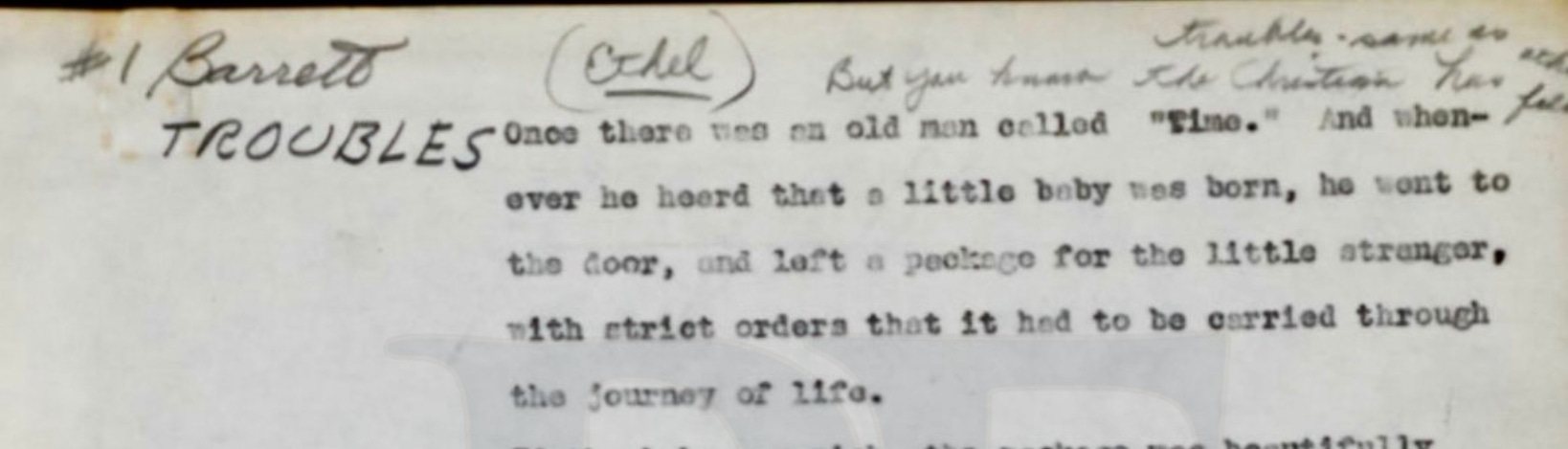
This manuscript, filed in Ethel’s archive as “Time,” but bearing a hand-written title of ‘Troubles,” is a classic example of Ethel’s ability to integrate and adapt timeless spiritual allegories for a modern audience. The bag of troubles beckons to Bunyan’s Pilgrim’s Progress’s burden of sin, while the 'Stepping Stones' motif has roots in 19th-century homiletics, Ethel has completely reimagined the narrative—introducing the character of 'Experience' and anchoring the truth in the contemporary life of evangelist Jack Wyrtzen.1
Troubles
By Ethel Barrett
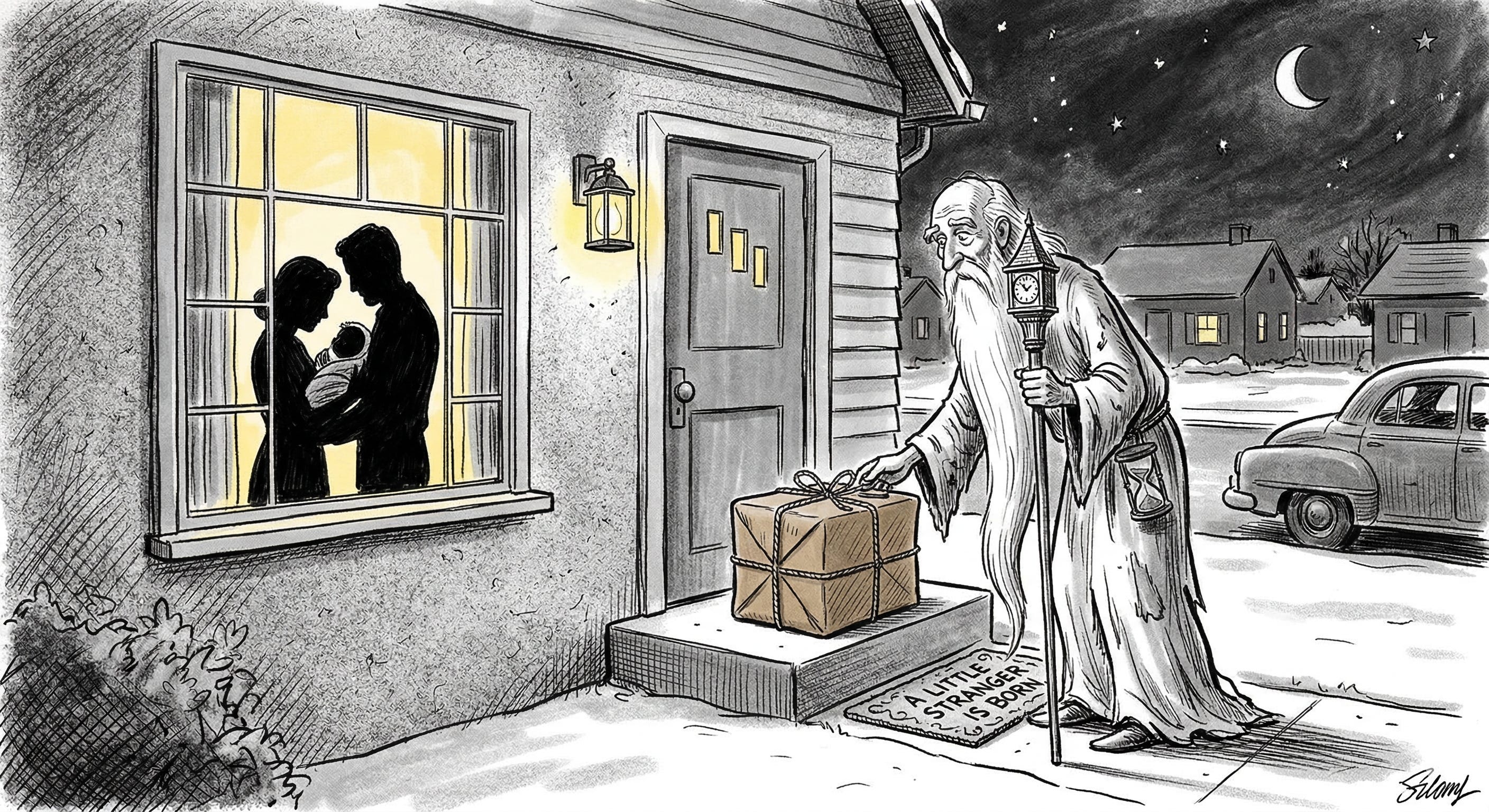
Once there was an old man called “Time.” And whenever he heard that a little baby was born, he went to the door, and left a package for the little stranger, with strict orders that it had to be carried through the journey of life.
If the baby was rich, the package was beautifully wrapped. If the baby was poor, the package was wrapped in plain brown paper. But when the rich and poor alike opened their packages, what do you suppose they found?
Troubles.
They tried to burn them, but they would not burn. They tried to throw them into the sea, but they would not sink. There was no way to get rid of them...There was nothing to do but take them along Life’s journey.
And this is the way they did it.
Some of them tied their troubles all up again, and with a long string, they put them around their necks and hung them in front of. Millstones. / So when they walked along, their heads were bowed and their eyes were down, and they couldn’t see the beautiful things of life at all.
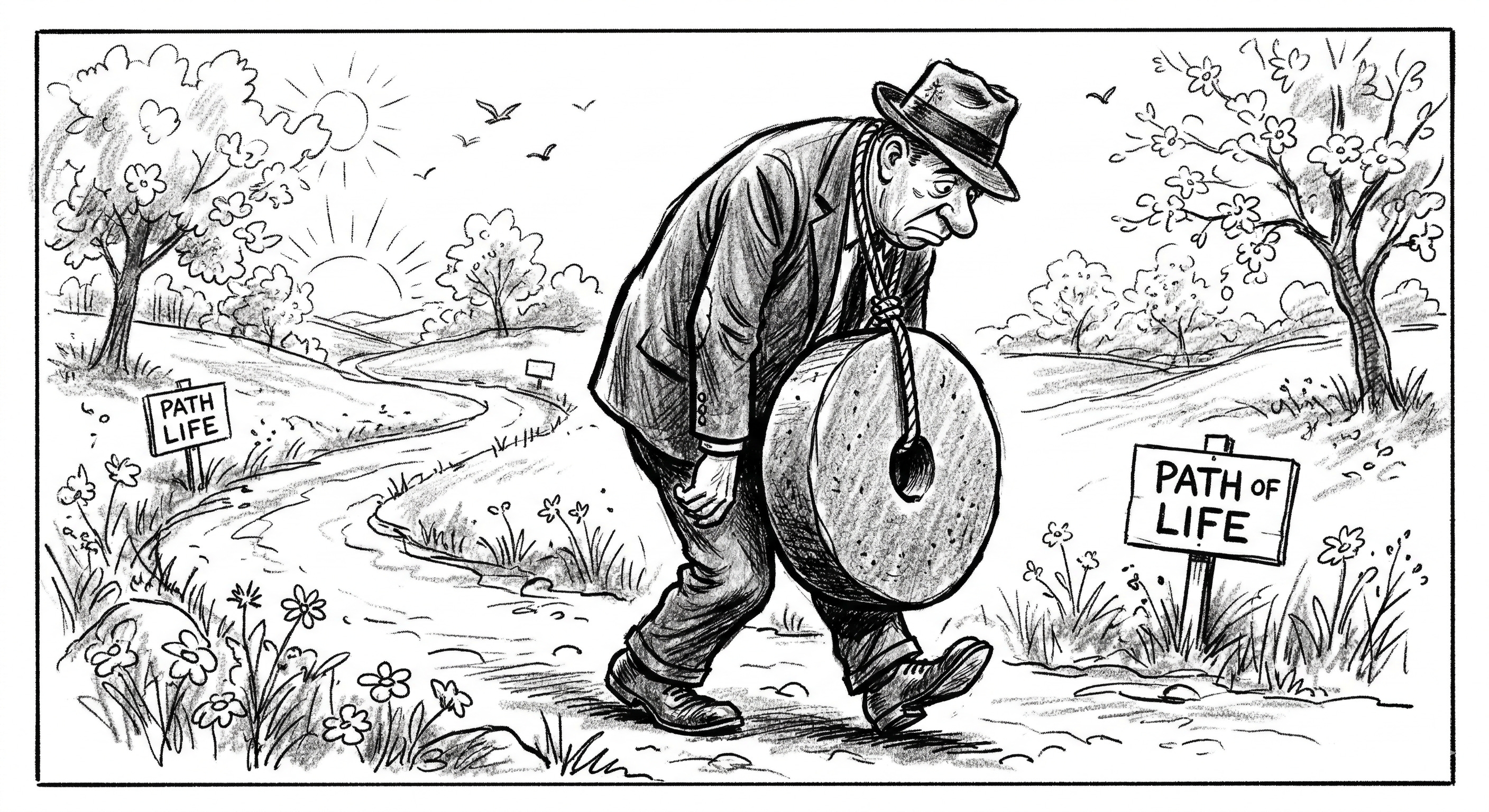
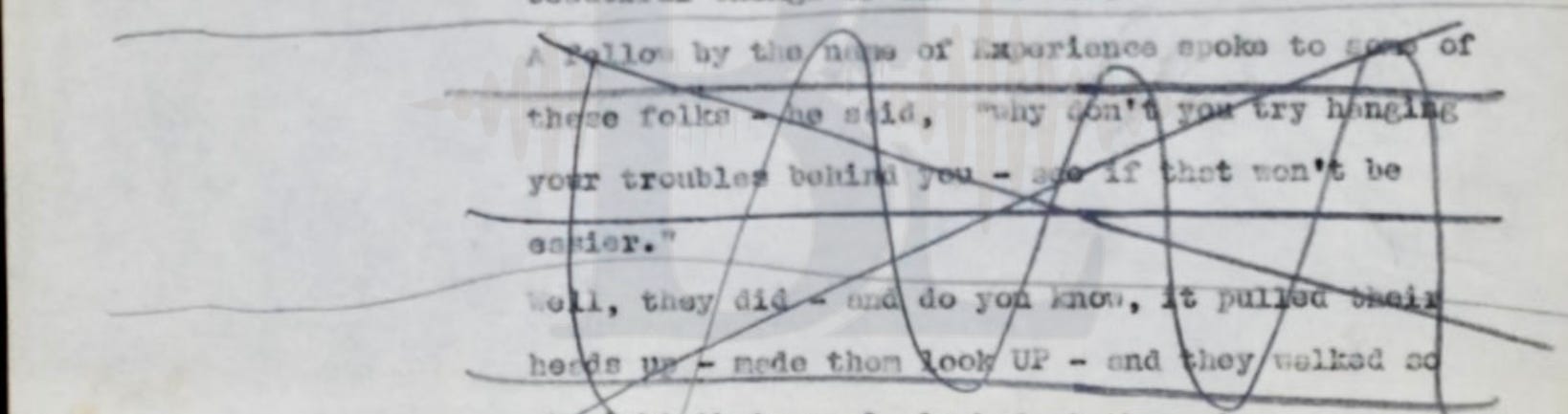
A fellow by the name of Experience spoke to some of these folks—he said, “why don’t you try hanging your troubles behind you—see if that won’t be easier.”2
Well, they did—and do you know, it pull their heads up—made them look UP—and they walked so straight that people looked at them in wonder, that with such heavy burdens, they walked straighter than those who seemed to have no troubles at all.
There were folks who didn’t carry them altogether. They took them out one by one and spread them along life’s highway, and some of them—oops, stumbled over them, and fell down and hurt themselves and discouraged others—and when they came to the end of the journey they were all bruised and sore. They hadn’t been any good to themselves or anybody else, because they’d stumbled over what were never meant for “stumbling stones.”
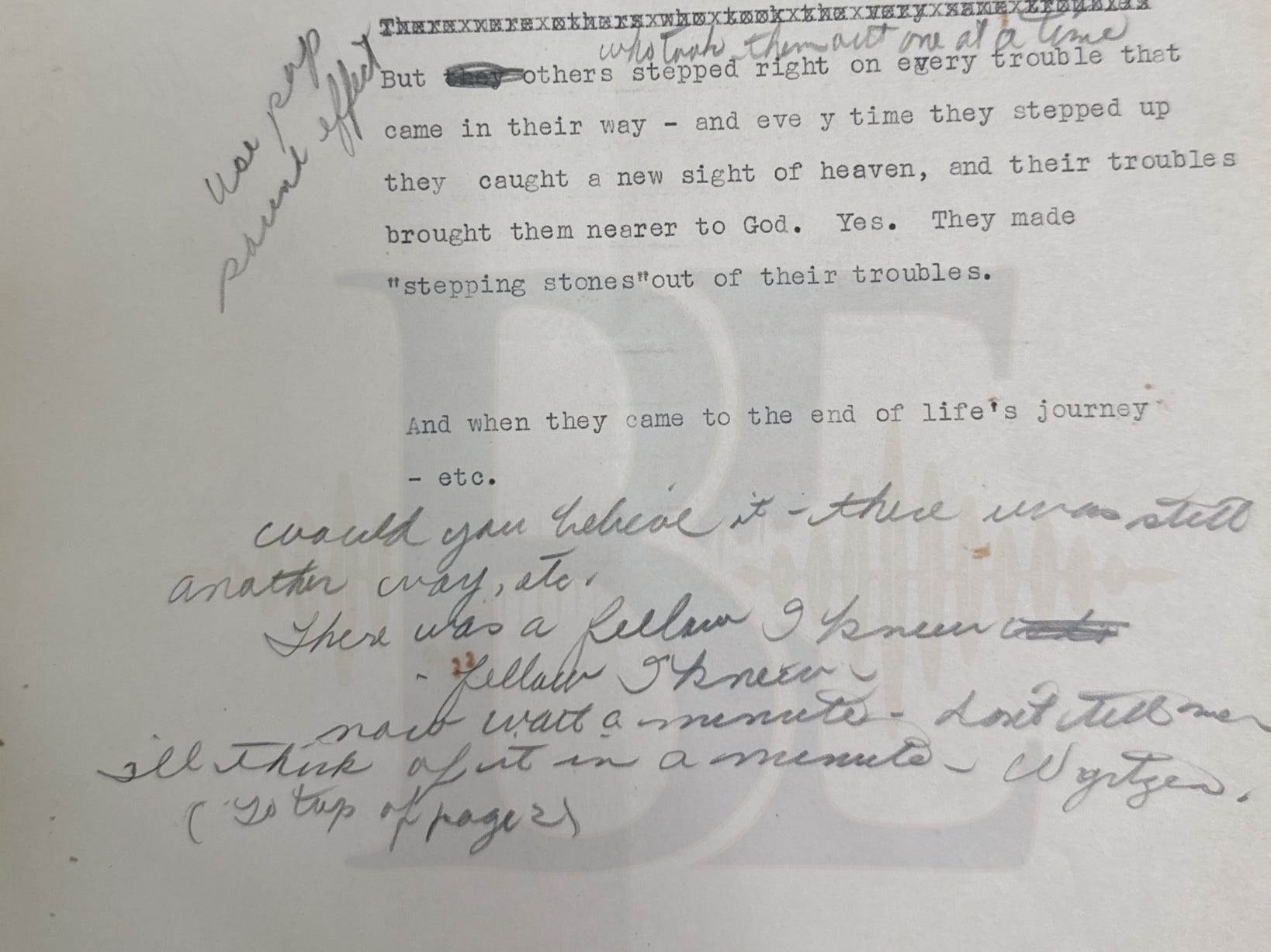
But others who took them out one at a time spread them along the path and stepped on them. —and every time they stepped up, they caught a new sight of heaven, and their troubles brought them nearer to God. Yes. They made “stepping stones” out of their troubles.
Would you believe it—that there was still another way you could use up those troubles. There was a fellow I knew—fellow I know—now wait a minute—don’t tell me—I’ll think of it in a minute -- Wyrtzen... Jack Wyrtzen. Every trouble he had, he put it on the road and it marked an event in his life.3
And when he looked back on the road he had come along he could see all that he had passed by, that he would never have to pass again—and it made his troubles beautiful MILESTONES.
Well, so all these people used up their package of troubles, each in his own way—and when they came to the end of their journey, those who had made them stumbling stones and millstones looked back and saw that they had missed the point completely. But those who had made them stepping stones and milestones looked back—and there were no more troubles on the path. Old man experience had gathered them up and made them into beautiful mounting stones to a higher life.

And then, when Time closed the door, those who know the Lord found themselves where there are no more troubles, but they had to account to God for how they had used their troubles while they were on their journey.
© 2026 Barrett Enterprises LLC. All rights reserved. This work is an original adaptation by Ethel Barrett. While the underlying themes may derive from historical or public domain sources, the specific dramatic structure, dialogue, and performance cues are the protected intellectual property of Barrett Enterprises LLC. For permissions or archival inquiries, please contact the estate.
Jack Wyrtzen (1913–1996) was a prominent American evangelist and youth leader who founded Word of Life Fellowship, a ministry that significantly influenced mid-century evangelical culture through massive rallies and radio broadcasts.
In the original manuscript, Ethel had lined out the section regarding 'Experience' suggesting we hang our troubles behind us. While she may have cut this for time during a live broadcast, I have restored it here. Without this bridge, the transition from 'bowed heads' to 'walking straight' loses its narrative logic. It is a rare glimpse into her editing process—balancing the clarity of the story against the time constraints of a “live” performance.
This portion on Jack Wyrtzen appears to have been a later addition. In Ethel’s style with feigning memory lapse, this would pull an audience, very familiar with Jack Wyrtzen, into the story. It is likely that Ethel told this story at a Jack Wyrtzen sponsored event or an event at which both of them were appearing.